
A practical guide from Packaging in Time to help you choose better materials, structure, printing, and finishing for custom boxes.
Offset printing for packaging gives a converter controlled plate-based reproduction of detailed artwork on paperboard sheets and selected packaging substrates. The process suits jobs where color consistency, fine type, screened images, and repeat production matter more than eliminating all setup. Quantity alone does not decide whether offset is appropriate. Board, box style, ink coverage, number of versions, finishing, proof standard, and delivery schedule all affect the result.
The process is most useful when the package needs a stable print reference across a planned run. It can support retail cartons, sleeves, presentation wraps, and litho-laminated corrugated packaging, while digital printing may be more practical for short runs or frequent artwork changes. This guide explains the process, specifications, comparisons, limitations, and approval steps buyers need before requesting a quote.
What Is Offset Printing for Packaging?
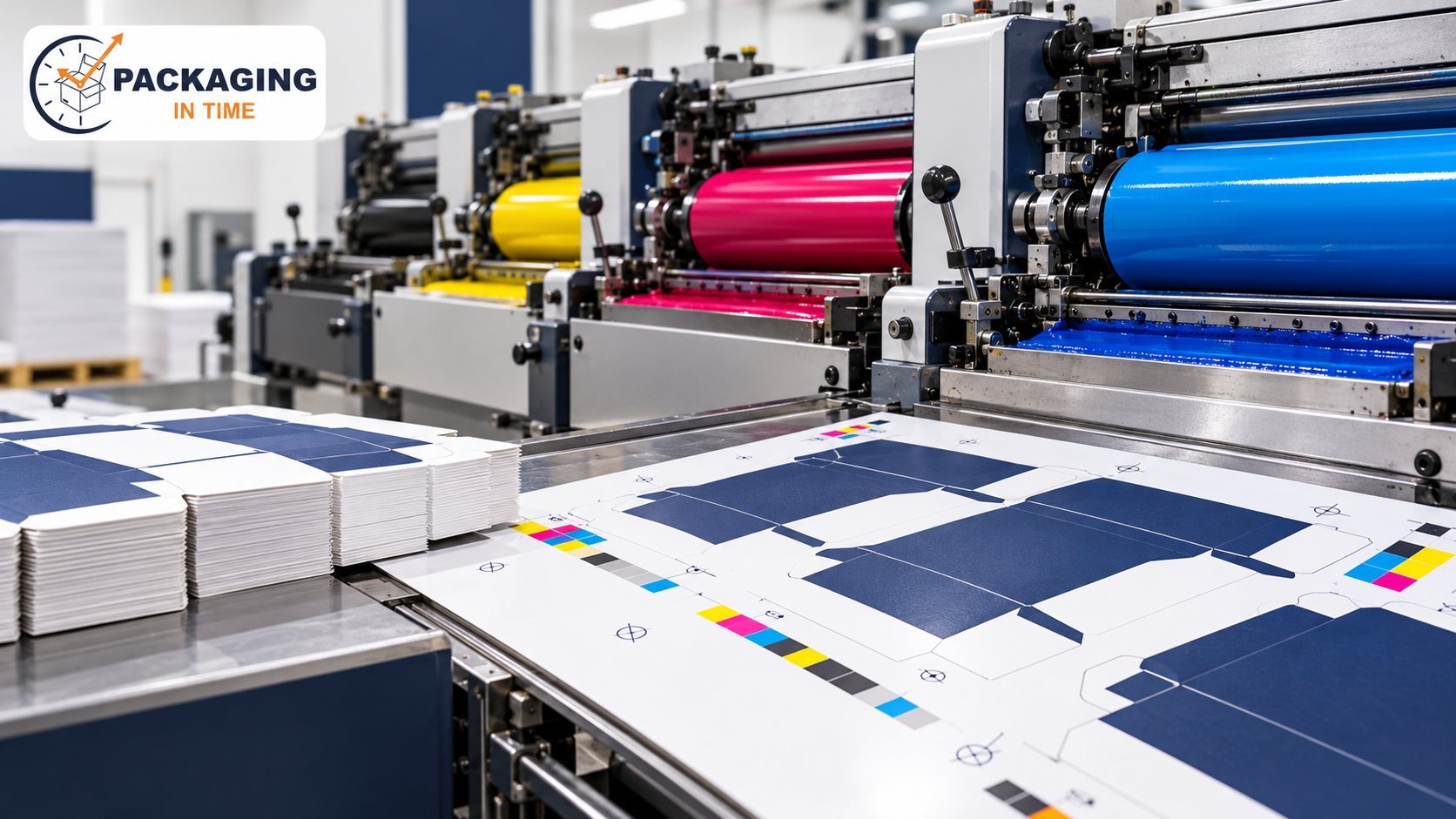
Offset printing is a planographic process in which ink transfers from a plate to a rubber blanket and then to the printed sheet. The blanket offsets the image onto the substrate, allowing the plate to remain separated from the board or paper surface. Packaging converters use the process for detailed folding-carton artwork, printed wraps, labels, and paper sheets that may later be laminated to corrugated board.
The central output is a printed sheet, not a finished box. After printing, the sheet may receive aqueous coating, varnish, lamination, foil, embossing, or another finish before die cutting, scoring, folding, and gluing. The print specification therefore needs to be coordinated with the dieline and the converting sequence.
How Does the Offset Printing Process Work?
Artwork preparation converts the approved packaging file into separated process colors or specified spot colors. The prepress team checks bleed, trapping, overprint, image resolution, barcode placement, dieline orientation, and panel content before plates are produced.
Plate making creates one plate for each process color or selected spot color. A four-color CMYK job normally uses cyan, magenta, yellow, and black plates. Each plate carries a screened image that combines with the other plates through controlled registration. Spot colors add separately specified inks when a brand color needs a defined reference beyond process simulation.
Press setup establishes paper position, ink density, water balance, registration, and drying behavior. The press operator checks printed sheets against the approved proof or color reference. Make-ready sheets are used to bring the press into specification, so setup time and material waste form part of the cost structure.
Converting follows printing. The printed sheet may be coated or laminated, then die cut and scored. Folding-carton production adds folding and gluing, while litho-lamination mounts the printed sheet to corrugated board. Each downstream step can change the final appearance, so approval should include the completed structure when finish or fit is important.
When Is Offset Printing a Good Fit for Packaging?
Offset printing fits packaging that needs detailed images, fine type, controlled halftones, repeatable color, and a planned production quantity. It is commonly considered for retail cartons, premium sleeves, product presentation boxes, and printed liners or facings that will be converted after printing.
Longer repeat runs can distribute plate and setup costs across more units. The project research uses 1,000 or more units as a planning example for offset economics, but the actual break-even point depends on sheet size, number of colors, board, coating, tooling, versions, and finishing. A supplier should quote the complete job rather than applying a universal threshold.
Offset becomes less attractive when the buyer needs a very short run, frequent artwork changes, many personalized versions, or a fast proof-to-production cycle. Digital printing avoids conventional plates and can make those jobs easier to control, while flexography may suit corrugated surfaces and high-volume packaging with the appropriate artwork and plate setup.
How Does Offset Compare with Digital and Flexographic Printing?
Method | How it transfers ink | Useful packaging role | Buyer control |
Offset lithography | Plate-based sheet printing | Detailed graphics, repeat runs, folding cartons | Plate setup, make-ready, and version control |
Digital printing | Direct toner or inkjet transfer | Short runs, variable versions, rapid changes | Press gamut, board compatibility, and unit cost |
Flexographic printing | Relief plate transfers ink to the substrate | Corrugated packaging and high-volume surfaces | Plate detail, ink spread, and board texture |
Litho-lamination | Offset-printed sheet mounted to corrugated board | Retail corrugated packs needing a fine print face | Laminate registration, moisture balance, and conversion |
The comparison should remain tied to the finished package. A sharp printed sheet does not prove that a carton will fold, glue, scan, or survive handling. Conversely, a corrugated box selected for transit may not provide the smooth print surface needed for detailed retail artwork. The box layer and distribution role should be defined before the print method is chosen.
Which Materials and Finishes Work with Offset Packaging Print?
SBS paperboard offers a bright, smooth surface for detailed folding-carton graphics. Coated paperboard can improve ink holdout and alter gloss or rub behavior. Kraft and uncoated board absorb ink differently, so the same CMYK file may appear darker, less saturated, or more textured. White ink or a spot color may be considered when artwork needs an opaque base on a darker substrate.
Aqueous coating, varnish, matte or gloss lamination, spot UV, foil, embossing, and debossing can be applied after printing or coordinated with later conversion. A coating can change rub resistance and appearance, but it may also affect glue adhesion, score cracking, barcode scanning, or recycling decisions. The finish location and coverage should be shown on the dieline and checked on a physical sample.
Specification | Possible value | Confirm before approval |
Board surface | White coated, uncoated, kraft, or corrugated-facing sheet | Color reference and ink behavior on final substrate |
Print colors | CMYK process colors or specified Pantone/spot colors | Proof, lighting condition, and tolerance |
Finish | Aqueous, varnish, laminate, foil, or relief effect | Fold, glue, rub, and barcode compatibility |
Conversion | Die cut, score, fold, glue, or litho-laminate | Assembled sample and panel orientation |
What Artwork Controls Matter Before Plates Are Made?
The approved dieline should define cut lines, scores, folds, bleed, safe area, glue zones, window openings, and barcode quiet zones. The project guide uses a 3 mm minimum bleed and a 5 mm safe zone as planning values, but the supplier's current dieline requirements control the final file. Keep important copy and codes away from folds, seams, cuts, and finishing boundaries.
Color intent should state whether a panel uses CMYK, a spot color, a white underprint, or a combination. Pantone references help define a spot-color target, but the substrate, ink system, proof condition, coating, and viewing light still affect the result. A screen preview is not a production color standard.
Barcode and variable-data areas should be reserved before decorative graphics are finalized. A barcode needs contrast, quiet space, and a surface that supports scanning after printing and finishing. Verify the printed symbol at final size on the completed package rather than approving only a PDF view.
What Are the Main Offset Printing Risks?
Registration error can shift one color plate against another, creating halos, blurred small type, or misaligned graphics. Fine lines and small text should be evaluated at the final print size. Heavy ink coverage can increase drying time, rub risk, and color variation if the board and coating are not matched to the job.
Version error occurs when an old barcode, quantity statement, flavor, language, or regulatory panel remains in the approved file. Plate-based production can make late changes expensive because the change may require new plates, make-ready, and approval. Keep one controlled artwork file with a revision identifier and named sign-off owner.
Conversion failure can occur after a visually acceptable press sheet is approved. Coating may reduce glue adhesion, a heavy ink area may crack at a score, or a finish may interfere with barcode scanning. A structural sample and production-representative sample answer different questions and should not be treated as interchangeable.
How Should Offset Packaging Be Proofed and Approved?
A digital proof checks text, panel placement, dieline orientation, version content, and the intended color separation. A contract or color proof can provide a closer visual reference when color is commercially important, but its material and finish may still differ from the finished carton.
A physical structural sample checks dimensions, folds, scores, closure, glue, insert fit, and pack-out. A production-representative sample checks the selected board, print process, coating, foil, relief, and surface behavior. Approve each sample for the decision it can actually represent.
For a quote, provide the box style, internal dimensions, board, quantity, number of artwork versions, print coverage, CMYK or spot-color requirements, finish, insert, case pack, destination, and required date. For retail presentation, see custom product boxes. For a printed outer transit layer, see custom mailer boxes.
Frequently Asked Questions About Offset Packaging Printing
Is offset printing only for large orders?
No. Quantity is one factor, but board size, print coverage, finishing, number of versions, and repeat schedule also affect the economics. A supplier should compare the complete offset and digital specifications.
Can offset printing use Pantone colors?
Yes. A spot color can be specified alongside or instead of CMYK. The approved target still needs a stated substrate, proof condition, coating, and viewing reference.
Does offset printing protect a box during shipping?
No. Offset printing controls the printed surface. Shipping protection comes from the board structure, box geometry, closure, insert, outer shipper, and tested pack-out.