
A practical guide from Packaging in Time to help you choose better materials, structure, printing, and finishing for custom boxes.

What Are Custom Apparel Boxes?
Custom apparel boxes are secondary packages made around a defined folded garment, accessory set, and sales channel. They may be retail cartons, folding mailers, tray-and-sleeve packs, lid-and-base gift boxes, rigid set-up boxes, or corrugated shipping cases. Their job is to hold the product in a known position, protect its presentation, carry approved printed artwork, and make fulfillment more consistent.
A clothing box is not only an exterior shell. Its internal dimensions, closure, board, tissue, insert, and opening sequence affect the garment after it has been folded, packed, stored, handled, and delivered. A neck tie may hold tissue closed. A belly band may group a shirt and a card. A paperboard retainer may stop a rolled garment or small accessory from shifting. Each component has a different function.
The Garment, Retail Box, Shipper, and Fulfillment Layer
Start by naming the packaging layer. The garment is the product itself, including any sewn-in label, hangtag, folded card, belt, scarf, or other component sold with it. The retail box is the customer-facing carton or gift box. A shipper is the corrugated outer case that manages parcel or freight handling. The fulfillment layer includes the way a worker assembles, fills, closes, and places those components into a case.
One layer cannot automatically replace another. A rigid apparel gift box can create a clean opening and protect a folded item from ordinary retail handling. It may still need a corrugated shipper, divider, or void fill for a parcel route. In the same way, tissue limits direct rubbing, but it does not control product movement inside an oversized box.
Why Garment Type and Sales Channel Change the Specification
Garment type changes the internal specification. A lightweight T-shirt has a shallow folded footprint. A hoodie adds thickness, drawstrings, and a bulkier shoulder area. A button-down shirt may need a collar support and a fold pattern that protects the front placket. Knitwear can snag or show pressure marks if it is packed too tightly. A multi-piece set adds count control and often needs an insert or divider.
Channel changes the outer system. A boutique display box can prioritize presentation and easy opening. A wholesale pack may need consistent case count and durable handling. A direct-to-consumer order has to withstand the carrier environment and may be rated on arrival condition rather than shelf appearance. Give the packaging team both product and channel information before choosing a structure.
Which Apparel Box Structures Fit Different Garments?
The right structure follows the garment's folded size, weight, required presentation, storage plan, and channel. Avoid selecting a box only from a photograph. A mockup cannot show closure pressure, sleeve compression, tissue migration, or the time required to assemble a flat pack.
Folding Cartons and Tuck Boxes for Flat-Pack Programs
A folding carton is a paperboard box that is die-cut, scored, glued where needed, and shipped flat before assembly. A dieline is the production layout that identifies cut lines, score lines, glue flaps, bleed, and safe zones. Folding cartons suit apparel programs that need economical flat-pack storage, repeatable assembly, and printed exterior panels.
Straight-tuck or reverse-tuck closures can work for light folded garments, accessories, and boxed shirt programs. Auto-bottom or lock-bottom formats may add bottom support for heavier contents, but the garment's weight and the packer's method still need review. A tuck box should be checked with the final folded product, not an empty sample, because tissue, hangtags, and fabric thickness can change the top closure pressure.
Flat-pack storage is a practical advantage, but it transfers work to the packing line. Define whether the brand, a 3PL, a store team, or a contract packer will assemble the box. The fold sequence should be simple enough for that operation and tested at the real packout pace.
Rigid Gift Boxes, Lid-and-Base Boxes, and Magnetic Closures
A rigid set-up box is delivered in a formed shape rather than folded flat. Many rigid gift boxes use greyboard, a dense paperboard core wrapped with printed or colored paper. A two-piece lid-and-base box uses a separate lid that telescopes over a base. A hinged box can add a magnetic closure, which uses embedded magnets to hold the lid shut.
Rigid structures suit premium gifting, launch kits, apparel bundles, luxury knitwear, and products where the opening sequence matters. They provide a more fixed wall and lid form than a folding carton. However, they also take more storage volume before filling, create more components, and can scuff if placed into a parcel stream without a separate protective shipper.
A magnetic closure is a presentation component, not a shipping guarantee. Specify the lid alignment, magnet location, garment thickness, tissue build, and any ribbon or neck tie before approval. A box that closes cleanly with a thin sample may not close with a bulkier seasonal garment.
Sleeves, Trays, and Mailer-Style Apparel Boxes
A tray-and-sleeve format uses a tray or inner carton with an outer sleeve that slides around it. The sleeve gives a second printed surface and can create a reveal during opening. The tray carries the garment and tissue. This format works for gift sets, folded shirts, hosiery, sleepwear, and curated apparel programs where the sleeve does not need to carry the full shipping load.
Mailer-style apparel boxes use locking panels to form a shallow corrugated or paperboard box. They can combine a retail-ready interior with a closure suitable for shipping inside another case or, where properly designed and tested, direct parcel use. E-flute corrugated board is a thin corrugated profile often chosen where a printed mailer needs more wall structure than a folding carton. The final board choice depends on product weight, route, print method, and required presentation.
Structure Selection by Garment Type
Use the garment as the starting point.
T-shirts and light basics often suit shallow folding cartons, trays, sleeves, or mailer boxes.
Dress shirts may need a collar support, tissue, a belly band, and a more defined folded footprint.
Hoodies, denim, and heavy knitwear need more depth allowance and may benefit from a rigid base or stronger mailer structure.
Lingerie, socks, scarves, and small accessories can use compact tuck cartons, sleeves, or shallow rigid boxes with inserts.
Multi-piece gift sets need a defined count, divider layout, or retainer so the set still looks organized after handling.

How Should Apparel Box Dimensions and Garment Fit Be Specified?
Apparel box dimensions should begin with the actual packed garment. Do not start with a generic clothing size or an external box measurement. Measure the folded item after the approved fold method, tissue, hangtag, card, accessory, and any protective component have been added.
Internal Dimensions, Folded Footprint, and Depth Allowance
Internal dimensions describe the usable space inside the completed box. The folded footprint is the length and width occupied by the garment after folding. Depth allowance is the space required for its thickness, tissue, bulk variation, and closure movement. These three values must be kept separate from external dimensions because board thickness, wraps, and closures change the outer size.
Measure the largest expected garment configuration. A size run may change sleeve bulk, chest width, fabric weight, or the amount of tissue required. A hoodie with drawstrings or a heavy cuff may create a high point that presses against the lid. A box can look correctly sized while producing a strained closure or a visible lid bow.
Fold Sequence, Tissue, Hangtags, and Accessories
The packout sequence defines the product's position. First, determine the garment fold. Next, add any collar support, tissue, belly band, hangtag, care card, ribbon, or accessory. Then measure the final packed unit. This avoids treating these parts as afterthoughts.
Tissue paper is a thin sheet used around the garment to reduce direct surface contact and provide a clean reveal. It can help protect dark garments from rubbing against a light interior and keep a fold visually tidy. Tissue does not stop movement by itself. Use a paperboard retainer, folded collar, divider, or correctly sized tray when the garment must stay in one location.
Hangtags and neck ties also need clearance. A tied ribbon, string, or tag loop can mark a garment if it is forced against the lid. Place decorative ties where they do not create a pressure point on the product, and confirm the placement during a physical packout.
Fit Trials for Size Runs and Seasonal Assortments
A physical sample should include the smallest, largest, thickest, and most fragile garment expected in the box. It should also include accessories, tissue, printed inserts, and the final closure. A digital proof verifies art placement. It cannot verify whether a thick sweatshirt pushes open a tuck flap or whether a foil logo cracks across a score.
Seasonal programs add another risk. A carryover box may be used with a new garment that has a different fabric, fold, or accessory set. Record the approved product family, maximum packed dimensions, and artwork version for every reorder. That reduces the chance that obsolete cartons or a prior fold method are used by mistake.
Which Materials Support Apparel Presentation and Protection?
Material selection controls both appearance and physical behavior. Paperboard, greyboard, corrugated board, tissue, films, adhesives, and decorative components should be treated as a package system rather than as unrelated purchases.
Paperboard, Greyboard, Corrugated Board, and Tissue
Paperboard has a smooth print surface and folds along scored lines, so it is commonly used for folding apparel cartons. Greyboard creates the structural core of many rigid gift boxes. Corrugated board has linerboards and a fluted medium, which adds wall thickness and cushioning for mailers, shipping cases, and some protective inserts.
Select the material after defining the use. A folding carton can present a light garment at retail. A rigid box can maintain a premium shape. A corrugated shipper can protect a completed retail box through transport. Treating those materials as interchangeable can create a package that is attractive but poorly suited to handling.
Inserts, Collars, Belly Bands, and Dividers
An insert should have a specific job. A paperboard collar can help a dress shirt keep its shape. A retainer can stop a garment or accessory from sliding. A belly band can group tissue and the garment without needing an oversized tie. A divider can separate two folded pieces in a gift set.
Specify the material, fold, location, and assembly method for every insert. A loose insert can shift during packing. An insert that is too tight can mark fabric or make removal difficult. Test it with the real garment and the intended worker process.
Windows, Neck Ties, Ribbons, and Closure Components
A window can show color, texture, or product detail, but it adds a film and adhesive component to the carton. It can also reduce available print area and change recovery conditions. A neck tie or ribbon can create a familiar gift-box opening, yet it adds manual assembly and must be placed where it will not compress the garment.
Decorative features should earn their place. Ask what each one does: reveal the product, keep tissue closed, identify a collection, or support a required opening sequence. Then check its effect on labor, storage, abrasion, and transit.
How Are Custom Apparel Boxes Printed and Finished?
Printed apparel boxes need a controlled artwork file and a clear separation between customer-facing brand panels and operational zones. The external finish affects the first impression, but it also changes how the box rubs, folds, scans, and ages in storage.
CMYK, Spot Color, and Brand Color Approval
CMYK uses cyan, magenta, yellow, and black process inks to reproduce multicolor artwork. A spot color is a separately specified ink color used where a defined brand color is needed. Either method can be appropriate. The result depends on the board, ink system, print process, finish, proof, and viewing light.
Approve brand color on the intended substrate and process. A screen preview is useful for layout, but it does not show board shade, ink density, scuffing, or score cracking. A physical sample is especially useful for dark coverage, color-sensitive branding, or a finish that crosses a fold.
Matte, Gloss, Soft-Touch, Foil, Embossing, and Debossing
Matte and gloss treatments change surface reflection. Soft-touch coating creates a low-gloss tactile surface. Foil stamping applies a metallic foil under heat and pressure. Embossing raises a selected area, while debossing presses it below the surface. These are location-specific decoration choices, not general quality labels.
Set finish coverage, placement, and edge tolerances in the artwork and proof review. Foil near a score can crack. A dark soft-touch surface can show fingerprints or abrasion. Heavy texture can make small data harder to read. Use the final board and closure condition for approval.
Artwork Zones for Logos, SKU Data, and Retail Codes
Every dieline needs a bleed area for artwork that prints beyond the cut edge and a safe zone that keeps text and critical art away from cuts, scores, and glue areas. Barcode and SKU areas need readable contrast and a clear quiet zone, meaning the blank space around a code that supports scanning.
Keep codes away from folds, heavy foil, embossing, windows, and uneven surfaces. A box can carry a code graphic that looks acceptable but scans poorly because of contrast, placement, print variation, or damage. Confirm retailer-specific code, label, and case-pack requirements before artwork release. GS1 notes that retail 2D barcode implementation involves data, print quality, scan environment, and retailer readiness, not only the code image itself. GS1 retail guidance provides the broader implementation context.
What Labeling Information Belongs on the Garment Rather Than the Box?
The outer box can carry approved brand and product copy. It should not be assumed to replace the label attached to the textile product. The garment, hangtag, polybag, and outer box can serve different roles, and the correct location depends on product category, market, and the rules that apply.
Fiber Content, Country of Origin, and Responsible Business Identity
For many textile and wool products sold in the United States, federal labeling rules require disclosure of fiber content, country of origin, and the identity of the manufacturer or another responsible business. The FTC's Textile Fiber Rule summarizes that framework. The brand should confirm which item, label, or tag carries the required information for its specific product and market.
An apparel box may repeat product information for retail or inventory purposes, but the packaging team should not move mandatory garment information to the outer box without the responsible brand's regulatory review. The packaging converter supplies the approved structure and print. The brand, importer, or responsible business approves the final product label and market claims.
Care Instructions and Garment-Attached Labels
Care information has its own rule path. The FTC explains that the Care Labeling Rule requires manufacturers and importers to attach care instructions to covered clothing and certain piece goods. A box insert or printed panel can support customer communication, but it should not be treated as a substitute for the attached care label.
This distinction affects artwork planning. Keep the retail-box copy, garment label, hangtag, and any care card under separate ownership and approval. That separation reduces the chance of printing outdated instructions on a carton because a garment-label revision was not communicated to the packaging workflow.
Retail Box Copy, Claims, and Market-Specific Review
Retail packaging may show a collection name, size indication, color, SKU, web address, or approved claim. Claims about fiber, recycled content, origin, performance, or care should be reviewed against the garment's current documentation and the target market. Do not use a packaging finish or recycled paper claim as proof of a garment claim.
The FTC's apparel-labeling overview is a useful starting point, but it is not a substitute for category- and market-specific review. FTC apparel labeling guidance identifies the federal disclosure areas for most textile and wool products.
How Do Tissue, Inserts, and Neck Ties Shape the Unboxing Experience?
Unboxing begins with the first package surface but ends with product condition. The better system is the one that opens in order, protects the garment, and can be packed consistently.
Tissue as a Surface-Protection and Presentation Layer
Tissue creates a thin interface between fabric and box board. It can reduce direct contact, cover a folded item, and create a controlled reveal. Tissue works well for apparel because it adds little thickness, but its behavior depends on fold method, static, moisture exposure, and how tightly the package is filled.
Use tissue with a defined wrap direction and tuck point. A tissue sheet that looks neat at a photo shoot may open during handling if it is not held by a belly band, sticker, or tuck. If the garment must arrive in a fixed position, add a retainer rather than relying on tissue alone.
Retainers That Control Movement and Opening Position
Retainers can be folded paperboard collars, tabs, platforms, or dividers. Their purpose is mechanical: they set a location, separate products, support a fold, or reduce movement. They also change the opening sequence, because the customer may lift the garment with the retainer or remove it first.
Specify removal behavior. An insert that grips too firmly can pull fabric or frustrate a customer. One that is too loose creates inconsistent presentation. A physical sample should be evaluated after ordinary handling, not only immediately after packout.
Decorative Components That Need Packout Testing
Ribbons, neck ties, seals, belly bands, and printed cards can help identify a collection or stage the opening. However, every added part creates another assembly step and another chance for variation. The packer needs an approved order of operations and a clear visual reference for tie position, tissue fold, card placement, and final closure.
Test decorative components under the same time, staffing, and shipping conditions that the live program will use. A process that works for ten photographed samples may fail at a larger fulfillment run if it needs delicate hand alignment.
How Should Apparel Boxes Be Prepared for Retail and E-Commerce Distribution?
Retail presentation and transit protection are connected but separate requirements. A finished retail box can be placed in a case, on a shelf, at a counter, or in a carrier network. Each route creates different compression, vibration, abrasion, and edge-drop conditions.
Retail Presentation, Case Packs, and Shelf Handling
For retail, specify the unit count per case, unit orientation, exterior case label location, shelf-opening method, and whether the box faces the customer or is handled by staff. The case pack is the defined number of retail units grouped in one shipping case. It affects replenishment, storage, and how often the customer-facing box is touched before sale.
Protect finished surfaces from rub damage inside the case. Matte dark boxes, foil, and wrapped rigid board can show abrasion more readily than uncoated kraft. The right case layout may need dividers, tissue, sleeves, or consistent orientation.
Parcel Shippers, Void Fill, and Dimensional Weight
For direct-to-consumer orders, decide whether the apparel box is itself the shipper or sits inside a separate corrugated carton. A retail box may need a larger outer shipper, paper void fill, or a fitted mailer to avoid crushed corners and movement.
Dimensional weight is a carrier billing method based on package size as well as actual weight, so right-sizing is a cost and handling decision, not only a material decision. Carrier formulas and thresholds change, so confirm them before quoting.
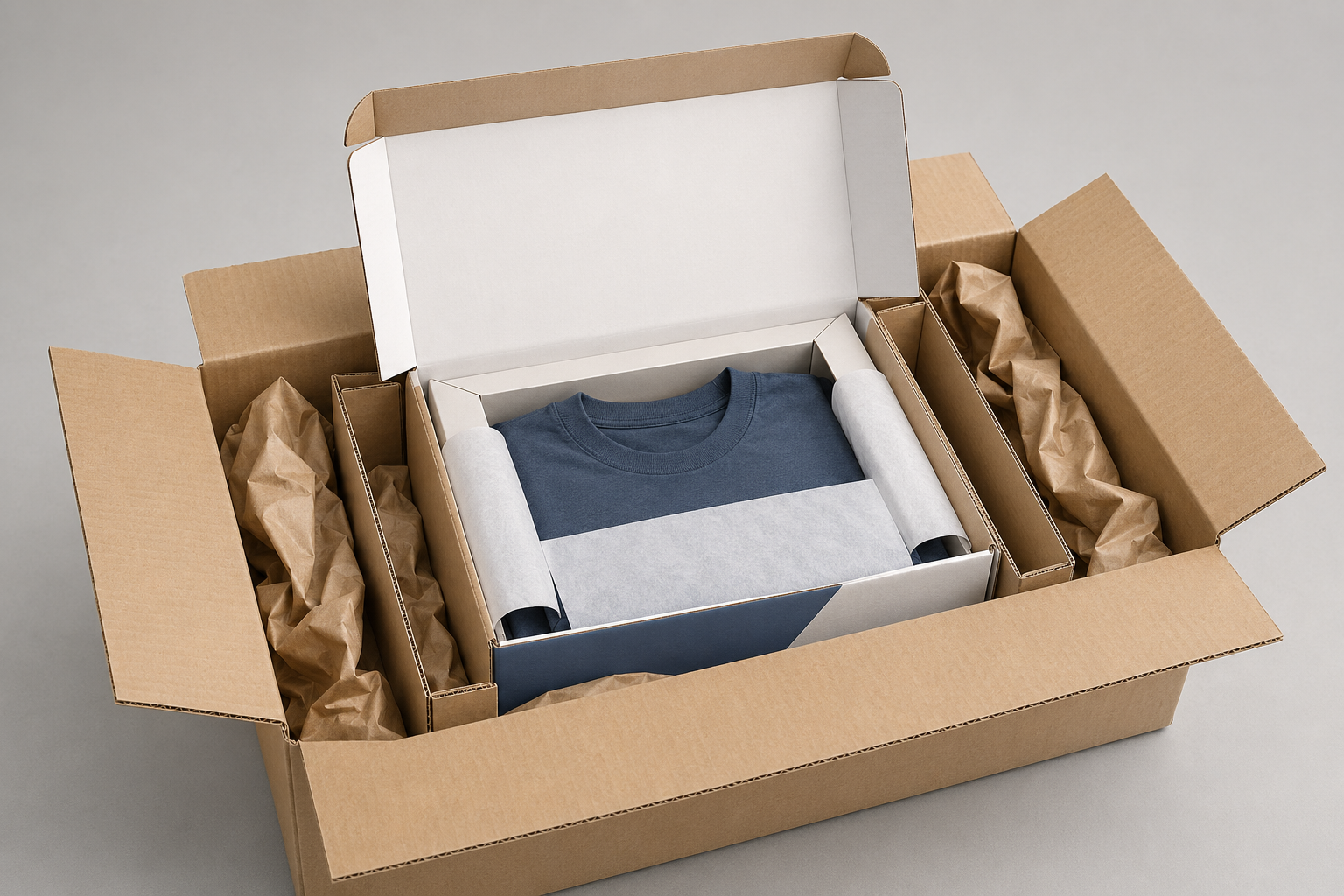
Physical Samples and Distribution Evaluation
A physical sample checks the actual garment, tissue, closure, finish, retail box, shipper, and packout process together. Evaluate the final configuration after storage, handling, and ordinary opening. If the package will travel through a demanding channel, evaluate it against that real distribution environment.
The International Safe Transit Association describes testing as a way to assess a specific product, package, and distribution environment. ISTA guidance should not be used as a generic performance claim. The product, packout, procedure, result, and any later change all matter.
Which Sustainability Claims Need Product-Specific Evidence?
Material claims need evidence for the actual bill of materials. Paperboard can contain recycled content. Fiber can be sourced through an FSC chain-of-custody program. A particular box can also include coatings, film windows, magnets, ribbon, adhesives, tissue, or foam-like components that change the final recovery picture.
Recycled Content, FSC Claims, and Material Documentation
Use recycled content only when the specified material supports that claim. Use an FSC claim only when the approved supply chain and artwork are authorized for it. Ask for the relevant material documentation and claim wording before printing the claim. The FSC chain-of-custody framework explains why traceability controls matter for FSC product claims.
Coatings, Windows, Magnets, and Local Recovery Conditions
Gloss, soft-touch coatings, window films, embedded magnets, ribbons, and mixed-material inserts can affect how a package is handled at end of life. Do not present a rigid gift box with these components as universally recyclable. Describe the actual components and advise the brand to check local recovery conditions.
Right-Sizing and Inventory Risk
Material reduction can also come from right-sizing. A box that matches the folded garment can reduce empty volume, tissue use, and need for void fill. It can also help control carrier dimensional charges. But a smaller box is not automatically better if it stresses the closure or wrinkles the garment.
Inventory is another condition. A specialized seasonal print run can become obsolete if collection names, product claims, or colorways change. Use approval gates and reorder forecasting before producing a large inventory of date-specific or campaign-specific boxes.
What Should You Provide for a Custom Apparel Box Quote?
A useful quote starts with a complete specification. “Clothing box” is not enough to determine structure, materials, print, or fulfillment requirements.
Product and Channel Information
Provide the garment type, folded internal dimensions, thickness range, packed weight, fabric sensitivity, accessories, and the largest product variant. State whether the box is for retail, gifting, wholesale, e-commerce, or a mixed channel. Also state whether the product will go inside a separate shipper.
Structure, Material, Print, and Presentation Details
Identify the preferred structure, such as a tuck carton, mailer, sleeve, tray, lid-and-base box, or magnetic closure box. Include the desired board appearance, print surfaces, color system, finish, window, tissue, retainer, divider, belly band, neck tie, ribbon, and any card or hangtag. If you have a reference package, use it to explain the experience, not as a replacement for product measurements.
Artwork, Sampling, and Production Approval
Send the current artwork, logo files, approved copy, SKU or barcode requirements, and any retail instructions. Ask for the correct dieline before final artwork is built. Then separate the approval stages: digital proof for layout, physical sample for garment fit and finish, and production approval for the controlled final version.
Record the approved artwork revision, product family, material, finish, sample result, and reorder conditions. This keeps a new season, a new fabric, or an updated garment label from being packed into an old box by assumption.
Choosing Custom Apparel Boxes for Your Garment Program
Custom apparel boxes work best when the garment and the packaging system are specified together. Folding cartons support flat-pack storage and repeatable assembly. Rigid gift boxes hold a formed presentation structure. Tissue, neck ties, belly bands, and paperboard retainers manage surface contact and product position. The retail box, shipper, and garment label still have separate jobs.
Start with the real folded garment, its thickness range, accessories, and channel. Then select the box structure, internal dimensions, board, print system, finish, tissue, and shipping layer that match those conditions. Packaging in Time can use those inputs to prepare a dieline, sample plan, and production specification for custom apparel boxes.