
A practical guide from Packaging in Time to help you choose better materials, structure, printing, and finishing for custom boxes.
Custom Luxury Packaging Boxes for Premium Product Presentation
Luxury packaging has to perform after the first impression. A rigid box can look correct in a product photo and still arrive with rubbed corners, an insert that releases the product, or a lid that binds after final assembly. The practical question is not how much decoration a box can carry. It is whether the structure, insert, finish, and shipping system fit the actual product and sales channel.
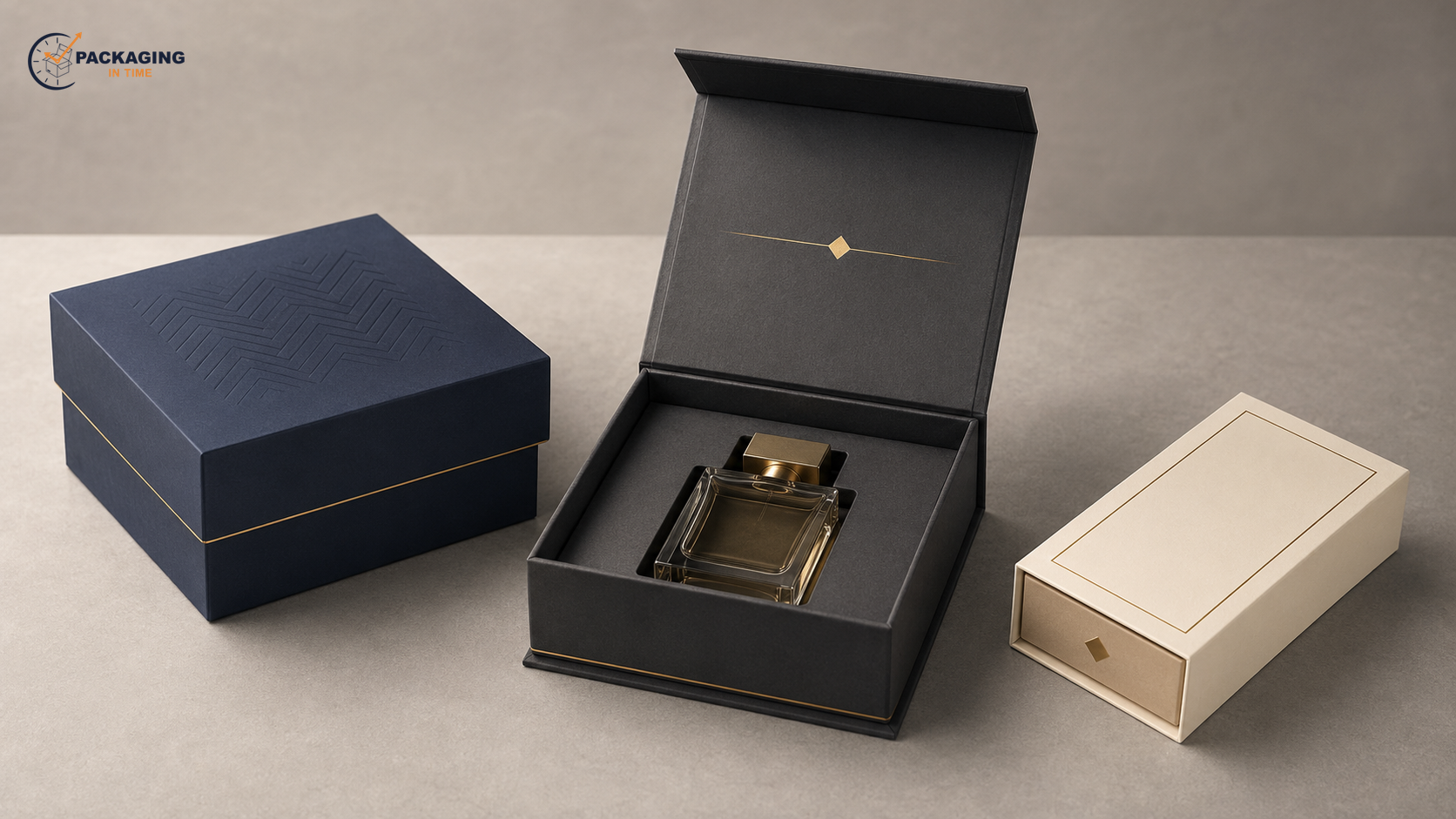
Custom luxury packaging boxes are usually built around a non-collapsible rigid structure, a controlled opening experience, and a customer-facing surface that needs more protection than a standard shipping carton. They are used for cosmetics, fragrance, jewelry, apparel, technology, corporate gifts, premium food gifts, and product kits. A luxury box may use a lift-off lid, a hinged magnetic flap, a shoulder-and-neck profile, a tray and sleeve, or a drawer format. Each structure changes the packing method, storage footprint, material use, and cost.
Packaging in Time helps brands turn those choices into a clear production specification. Start with the product, then choose the structure and insert. Printing and finishes come after the box can hold, close, pack, and ship correctly.
What Makes a Box a Luxury Packaging Box?
A luxury packaging box is a presentation package designed to make the product feel considered while protecting it through retail handling and final delivery. In many projects, it uses rigid board, often called greyboard, wrapped in printed or colored paper. The board holds its shape rather than folding flat like a standard carton. That construction gives the box weight, straight walls, and a more controlled opening action.
Decoration supports the presentation, but it does not define the box by itself. Foil, embossing, debossing, spot UV, textured wrap, soft-touch lamination, and ribbon can all be used on a luxury box. Still, a highly decorated box with poor product fit is not a premium result. The product, insert, lid, and outer shipper are part of the same system.
The retail box and the shipping box should also remain separate in the specification. A rigid cosmetic box can be the customer-facing retail package. A corrugated mailer or shipper protects that rigid box in parcel distribution. Asking one box to do both jobs often creates corner damage, surface rub, or unnecessary material cost.
Which Luxury Box Structure Fits the Product?
Quick structure match
Requirement | Typical luxury structure | Confirm before production |
|---|---|---|
Clean reveal and reusable presentation | Rigid lid and base | Product mass, lid clearance, wrap corners, insert height |
Defined side profile and lid action | Shoulder and neck | Neck height, lid friction, base clearance, wrap thickness |
Hinged premium closure | Magnetic rigid box | Flap alignment, magnet position, hinge behavior, outer shipper |
Gradual reveal and compact profile | Tray and sleeve or drawer | Sleeve friction, tray depth, pull detail, product retention |
Lightweight premium retail pack | Folding carton with selected finish | Closure, board stiffness, assembly, packed weight |
The right style depends on product mass, product geometry, how the customer opens the box, where the box is displayed, and how it will be delivered. Start with the least complex structure that gives the product the right fit and presentation.
Rigid Set-Up Boxes
Rigid set-up boxes are made from board that stays assembled. They work well for premium candles, glassware, beauty kits, electronics, apparel, and corporate gifting. A rigid box can be produced as a lid and base, a shoulder-and-neck box, a book-style magnetic box, or a drawer with a sleeve.
The benefit is stable shape and a solid hand feel. The tradeoff is storage and freight. A non-collapsible box occupies more space before packing than a folding carton. It also requires careful control of wrapped corners, lid fit, and surface protection.
Two-Piece Lid and Base Boxes
A two-piece box has a separate lid that telescopes over the base. It is a useful choice where the customer should see the full product after lifting the lid, such as apparel, gift sets, candles, and premium accessories. The lid can have a shallow or deep overlap. A deeper lid changes the reveal and can protect the base edge, but it also changes the required clearance.
Measure the finished product and insert inside the base, not just the bare product. Tissue, protective bags, dividers, and the inside wrap all use space. A physical sample is the best way to confirm that the lid removes smoothly without lifting the insert or scraping the product.
Shoulder and Neck Boxes
In a shoulder-and-neck box, an inner section rises above the base and the lid fits over it. The neck can create a visible line around the box and reduce the amount of base wall exposed when the lid is on. This structure is used when the opening motion and side profile need more definition.
The key control is friction. A lid that is too loose can shift in handling. A lid that is too tight can feel difficult to open or can damage a delicate wrap. Wrapped board thickness, neck height, insert height, and product clearance must be checked together.
Magnetic Closure Boxes
Magnetic closure boxes use embedded magnets in a hinged lid or flap. They are common for gift sets, premium apparel, launch kits, and technology accessories. The magnet creates a controlled closure, but it should be treated as one component in the structure. It does not prove that the box can survive parcel handling or replace a separate shipper.
Magnet position, flap alignment, hinge behavior, wrap thickness, and adhesive all affect the final result. Keep essential foil, embossed details, and small type away from the magnetic area and fold lines. A sample should confirm that the flap closes consistently after repeated opening and packing.
Tray and Sleeve or Drawer Boxes
A tray and sleeve uses a sliding outer sleeve around an inner tray. A drawer box is a related format that can include a pull tab. These styles create a gradual reveal and can work for fragrance, cosmetics, accessories, small electronics, and promotional sets.
Sleeve friction needs to be controlled. It should not slide off during handling, but it should not require excessive force from the customer. Product weight, insert height, surface coating, and wrap tolerance can all affect the slide action.
Folding Cartons With Premium Decoration
Not every premium project needs a rigid box. A well-specified folding carton can be a practical option for lightweight cosmetics, apparel accessories, retail products, and recurring programs. It stores flat before assembly and can carry strong print, foil, embossing, or spot UV. A folding carton has a different structural role from a rigid box, so it needs an appropriate closure, board selection, and packing plan.
For a comparison of related premium formats, see Custom Gift Boxes, Custom Cosmetic Boxes, and Magnetic Closure Boxes.
How Do Dimensions, Board, and Inserts Affect the Result?
The box begins with the packed arrangement. Measure the product at its widest, deepest, and tallest points after caps, cords, labels, protective bags, and normal accessories are present. For a multi-piece kit, measure the intended arrangement in the insert, not each item separately.
Internal dimensions should give the product enough clearance for loading and removal without allowing it to slide into the wall. The clearances depend on the product surface, packing method, insert type, and expected movement. A glass bottle needs a different support pattern from a folded shirt. A jar needs a different retention method from a leather accessory.
Board, Wrap, and Corner Quality
Rigid boxes commonly use thick board wrapped in printed or colored paper. The board thickness supports the shape. The wrap provides the visual surface. Corners, edges, paper grain, overlap seams, and glue areas affect how the finished box looks under close inspection.
Large dark panels and soft-touch surfaces can show scuffs more readily than a light textured wrap. A color that looks correct on a screen can look different on a textured or uncoated wrap. Ask for a material reference and proof when surface appearance is central to the brief.
Fitted Inserts and Partitions
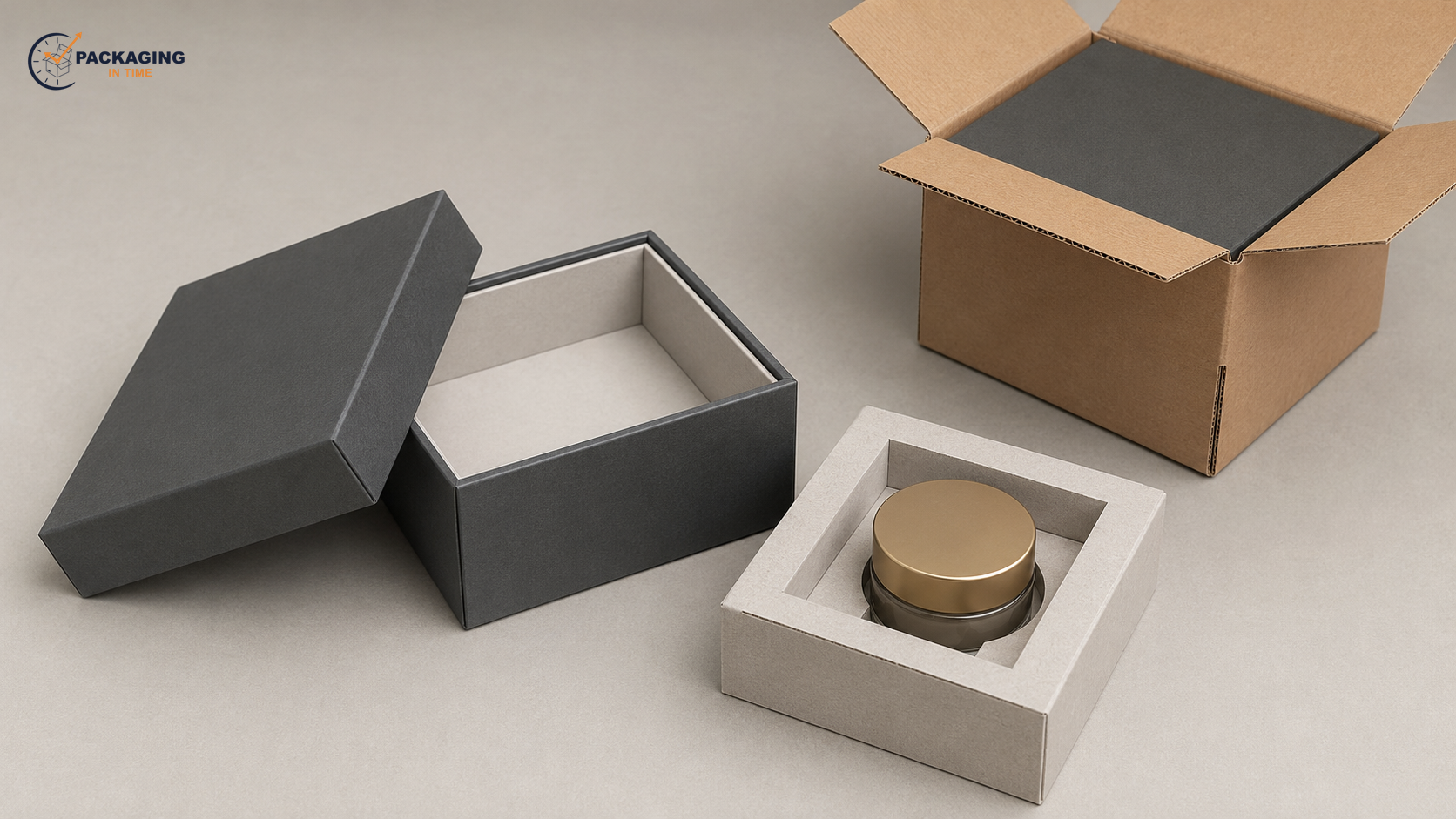
An insert should restrain the product while allowing normal packing and removal. Paperboard inserts, molded pulp, foam, thermoformed trays, dividers, and pads solve different problems. The selection should come from product geometry, fragility, surface sensitivity, packing speed, and recovery requirements.
Avoid using an insert only as a visual frame. It must be tested in the closed box. Check whether the product moves after closing, whether the insert stays seated, whether a customer can remove the product cleanly, and whether packing staff can repeat the process at production speed. A product can look centered in an open sample but strike the lid during normal transport if the height has not been checked.
Which Printing and Finish Options Work on Luxury Boxes?
Print and finishing should direct attention to the areas that matter most. The preferred effect should be named before production, along with the panel, position, size, and expected appearance. A finish schedule is more useful than a broad instruction to make the box look premium.
Foil Stamping
Foil can add a metallic or colored accent to a logo, border, pattern, or small panel. It is most effective when it has enough clear space and contrast. Fine foil detail, artwork near an edge, or a large foil field across a fold can create registration and rub risks. A physical proof or representative sample is useful when foil is a central brand element.
Embossing and Debossing
Embossing raises a graphic or type element. Debossing presses it into the surface. Both can make a mark visible through light and shadow instead of color alone. The relief needs appropriate line weight, spacing, and distance from scores and corners. It also needs a board and wrap that can hold the intended detail.
Blind embossing or debossing uses shape without foil. Combining foil with relief can create a strong focal point, but the result needs a proof because registration and surface response matter.
Spot UV, Matte, Soft-Touch, and Anti-Scuff Treatments
Spot UV creates a glossy contrast on selected artwork. Matte finishes reduce reflection. Soft-touch wraps create a velvety tactile effect. Anti-scuff treatments can help protect selected surfaces, but they are not a guarantee against every mark or abrasion condition.
Choose the finish with normal handling in mind. Dark matte boxes can reveal fingerprints and rub. A gloss surface can show reflections in product photography. A textured paper can reduce the need for heavy decoration while changing print sharpness. The intended retail setting, packing method, and shipping plan should guide the choice.
How Should Artwork, Proofing, and Samples Be Controlled?
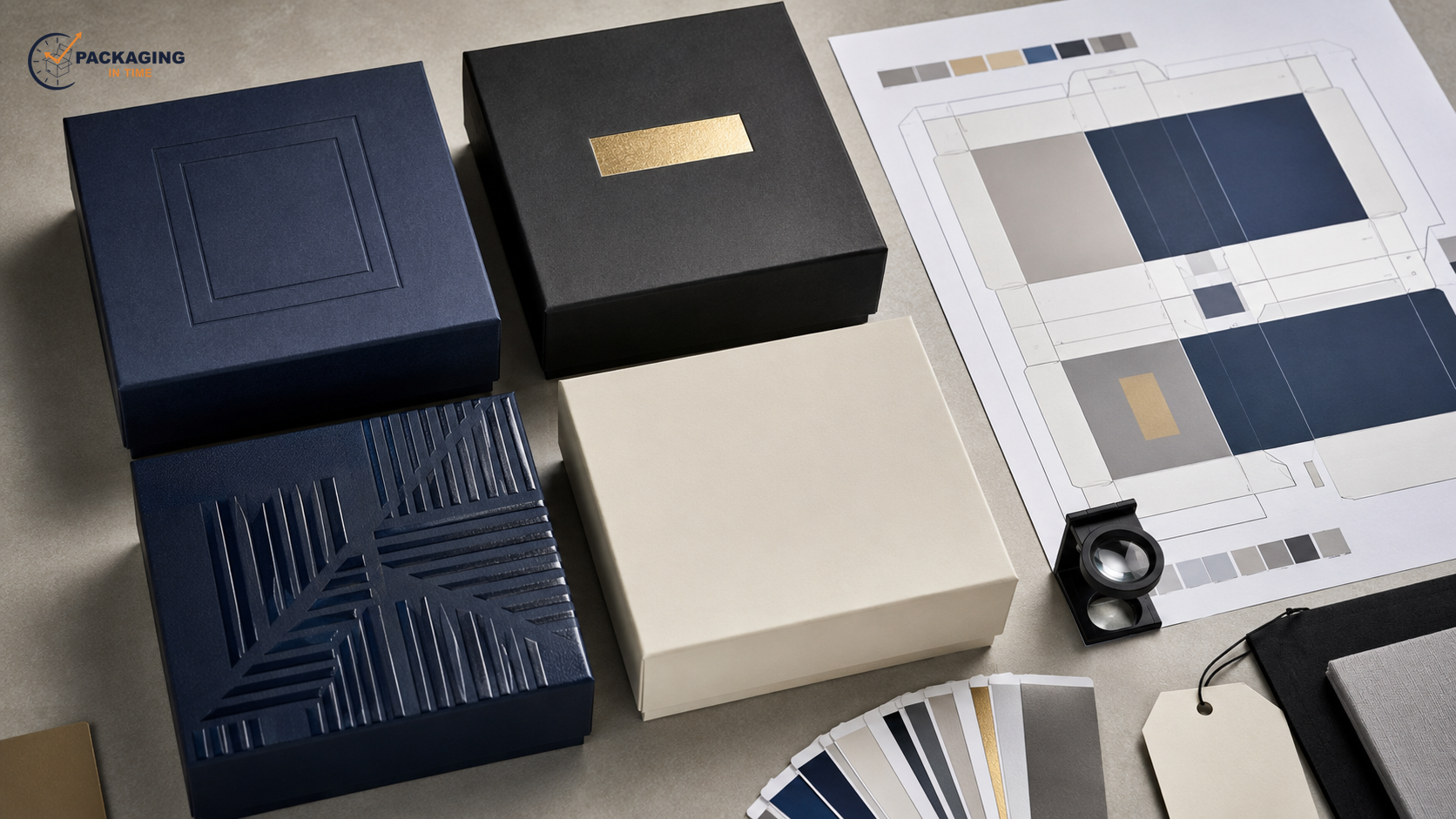
The dieline is the manufacturing map. It identifies cut lines, score lines, glue areas, safe zones, bleed, wrap panels, corners, closures, and insert geometry. Artwork should be built on the approved dieline revision and should keep essential text, codes, and finish details away from folds, glue seams, magnets, and high-wear edges.
For a luxury box, the control file should record the approved dieline, artwork version, material or wrap selection, color reference, finish map, insert drawing, product sample reference, proof status, and approval owner. This protects the project when a revision occurs between design, sampling, and production.
A digital proof checks layout, spelling, panel placement, and many print details. It does not prove product fit, lid friction, insert retention, magnet performance, surface durability, or shipping performance. Use a physical sample or pre-production prototype where those factors matter. Review the product in the complete packout, not only an empty box.
How Should Luxury Boxes Be Protected in Transit?
Luxury retail boxes should usually travel inside a separate corrugated mailer or shipper. The outer package protects the customer-facing surface from drops, stacking, compression, and abrasion. It also provides space for selected cushioning or void-control material.
Right-sizing matters. Too much space can allow the retail box to move. Too little space can transfer impact directly to the rigid box. Review the packed outer dimensions and weight after the product, insert, retail box, and transit protection are finalized.
ISTA explains that package design and testing should represent the actual packaged product and distribution environment. Test results should be documented, and relevant product, package, or process changes can require retesting. For a luxury package, inspect the retail box, insert, product, closure, corners, and printed surface after the proposed shipping route has been evaluated. Do not present a general box style as transit-tested without a valid record for that specific packed configuration.
Can Luxury Packaging Support Specific Material Goals?
Luxury packaging often combines materials. A rigid box may include board, paper wrap, adhesive, laminate, foil, magnets, ribbon, foam, printed tissue, and a plastic tray. That is why broad claims need care.
Use a specific claim that can be verified. Examples may include a stated recycled-fiber content, a verified responsible-fiber sourcing requirement, or a designed-for-reuse purpose. The FTC Green Guides explain that marketers should avoid misleading environmental claims and may need qualification. The EPA also advises checking local recycling programs because acceptance differs by location.
If FSC-certified material is required, verify the chain-of-custody route and the appropriate trademark permission before placing an FSC label in artwork. A paper-based box does not automatically qualify for every recovery or certification claim after finishes and added components are included.
Common Luxury Packaging Failures
Loose Fit, Product Contact, and Lid Friction
Loose fit allows movement. Over-tight fit can scratch the product or slow production packing. A lid can bind because the product height, insert thickness, board, and wrap were not measured as one system. Review the entire opening and closing sequence during sampling.
Scuffs, Cracked Wraps, and Inconsistent Finish Appearance
High-coverage dark surfaces and delicate finishes can reveal handling damage. Poor wrap tension can create lifted corners or visible seams. Finish appearance can vary when the substrate, color reference, or process changes without review. Define the acceptable material and proof standard before production.
Artwork, Dieline, and Change-Control Errors
Text near a score, a finish placed over an edge, an outdated dieline, or an unapproved material substitution can damage a premium presentation quickly. Keep one controlled production package and review any change that affects structure, fit, appearance, labeling, recovery instructions, or shipping performance.
How to Order Custom Luxury Packaging Boxes From Packaging in Time
Send the product dimensions, packed weight, product photos or a physical reference, quantity, delivery location, and required date. State where the box will be used: retail, gifting, direct-to-consumer, event, or subscription. Include the preferred structure, opening style, material look, print coverage, finish, insert requirements, and shipping plan.
Packaging in Time can help match the product to a rigid set-up box, magnetic closure box, lid and base box, sleeve, folding carton, corrugated shipper, or another custom format. For accurate pricing, the quote request should identify the complete package rather than only the outside dimensions.
Before approving a production run, confirm the final dieline, internal dimensions, board and wrap, insert, artwork version, colors, finish locations, proof or sample, quantity, delivery address, and delivery target. Then protect the retail box with an outer shipping system that matches its actual route.